Metroidvania
A subgenre named by mashing two franchise titles together, built on the simple pleasure of returning to a locked door once you have found the ability that opens it.
Metroidvania is a subgenre of action-adventure video games built around nonlinear exploration of an interconnected world whose sections remain sealed until the player acquires the abilities or items needed to reach them. 619 The term is a portmanteau of two video game franchises, Metroid and Castlevania, and specifically evokes the design shared by most Metroid games and the exploratory branch of the Castlevania series. 106 In Japan the same games are called “search action” (探索型アクション). 411
The defining structure is one of an “unlocking world”: the player begins with access to a small portion of a visible but largely inaccessible map, and each new ability opens a specific set of these locks so that the reachable area grows steadily over time, sitting in contrast to both linear and open-world designs. 3 Sections lie gated behind power-ups — such as the Morph Ball and High Jump Boots in the original Metroid — forcing reliance on a labyrinthine map and cultivating a sense of geographical bewilderment. 1 Character progression, whether through discrete upgrades or role-playing statistics, is a central component, and the genre is characterized by its non-linearity, backtracking, and platforming as the primary means of traversal. 6 The journalist Jeremy Parish, who helped popularize the term, has described these games as in some ways more accessible role-playing games that do not get bogged down in stats and menus, allowing characters to grow while exploring a vast world. 1
Origins
The genre’s roots predate its two namesakes. Games containing elements of the formula existed by the early 1980s, and Brain Breaker, released in 1985 for the Sharp X1, was one of the first to bring the pieces together, casting the player as a crash-landed spaceship pilot who collects items from a jet pack to a laser rifle across a large open world. 19
The two most-cited progenitors are Nintendo’s Metroid, released for the Famicom Disk System on August 6, 1986, and Konami’s Castlevania II: Simon’s Quest the following year. 111 Both let players unfurl the secrets of arcane worlds in any direction along the X and Y axes. 1 Metroid followed the bounty hunter Samus Aran through the mazelike fortress planet Zebes toward the Mother Brain at its center, expanding the player’s reach with abilities gathered along the way; its dark, isolated, alien atmosphere was inspired in large part by the film Alien. 115 Parish, whose first game as a child was Metroid for the NES, has recalled expecting a science-fiction Super Mario Bros. and instead spending weeks wandering “some unknowable, bewildering, mysterious labyrinth” before it became “a familiar journey through a beloved place.” 5

Symphony of the Night and the naming
The subgenre took its consolidated form with Castlevania: Symphony of the Night, released in Japan in mid-1997 for the PlayStation. 10 Its director, Koji Igarashi, invigorated the gothic action series by introducing a Metroid-like structure in which the player navigates a massive castle, unlocking new abilities to open further areas. 5 The impact was profound enough that the style came to be called “Metroidvania” in honor of its two most significant progenitors. 5 According to Jeremy Parish, he did not coin the word but picked it up from his former 1UP.com coworker Scott Sharkey, who had used it to describe the handful of Castlevania games that adopted a Metroid-like exploratory worldview; Parish then used it frequently and indiscriminately from around 2003 to keep attention on a game format he felt was in danger of vanishing. 102 In its earliest, embryonic sense the word described just four games — Symphony of the Night and its portable successors Circle of the Moon, Harmony of Dissonance, and Aria of Sorrow — all of which brought in-game auto-map overlays and subscreens closely resembling the one Nintendo had introduced in Super Metroid (1994). 10
Igarashi has repeatedly disputed the Metroid connection. He has stated that his team set out to make a Legend of Zelda-style game rather than a Metroid-like one, but that because Symphony was side-scrolling it was compared to Metroid; he attributes the exploration and locked gates requiring specific items to the Zelda series. 912 He prefers the term “Igavania” for his own work, and has said he was nonetheless grateful for “Metroidvania” because, on leaving Konami, he was told he could not use the Castlevania name to describe his plans. 912 Parish has noted that the most direct Zelda touchstone available to the Symphony team would have been A Link to the Past for the Super NES, since the game preceded Ocarina of Time. 10
The term has drawn persistent criticism for being opaque to anyone unfamiliar with its two root words and for describing franchises rather than a category of interaction, unlike terms such as “first-person shooter.” 23 Commentators have proposed alternatives including “Platform-Adventure,” “unlocking world,” and “MetroidSymphony,” none of which has displaced the original. 63
Indie revival and expansion
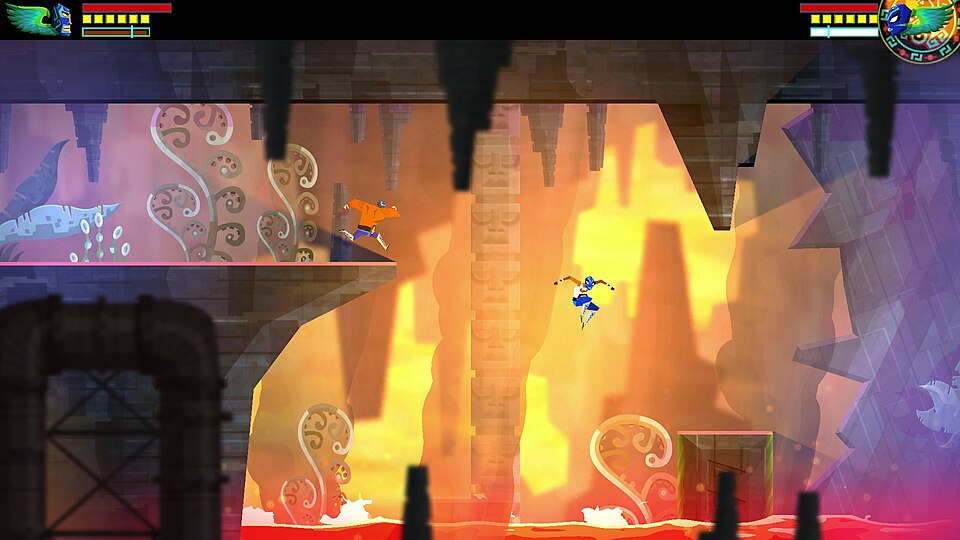
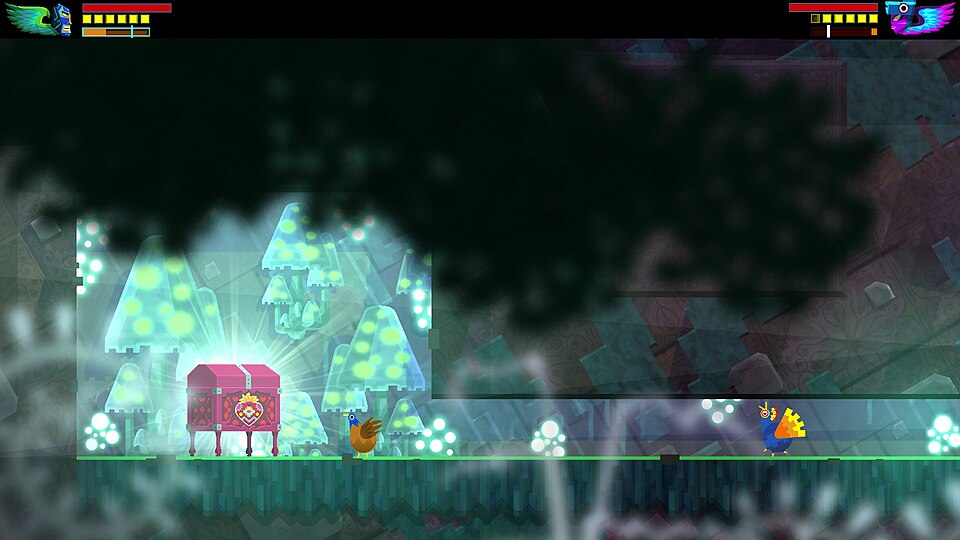
Although the genre seemed in decline in the early 2000s, it flourished with the rise of independent development. 10 The freeware Cave Story, created single-handedly by Daisuke “Pixel” Amaya and released for PC in 2004, made its debt clear; Amaya said in a 2010 interview, “More than anything else, I love Metroid.” 5 Axiom Verge (2015), the sole work of developer Tom Happ, kept a mysterious science-fiction aesthetic while adding tools such as a gun that creates glitches in the world; Happ likened the format to “the side-scrolling equivalent to an open-world 3D game.” 5 Guacamelee (2011) fused the Metroid structure with brawler-style combat and a lighthearted tone, while Ori and the Blind Forest (2015) used the structure, its co-founder Thomas Mahler said, to build “a connected, believable world.” 57
Later notable entries include Hollow Knight (2017), Dead Cells (2017), Ori and the Will of the Wisps (2020), Blasphemous (2019), Prince of Persia: The Lost Crown (2024), Animal Well (2024), and Ultros (2024). 1316201 Igarashi himself returned to the form with Bloodstained: Ritual of the Night, funded through Kickstarter after publishers declined the project. 916 The genre has proven flexible enough to accommodate variants: 3-D discovery in Metroid Prime (2002), the roguelike hybrid “roguevania” of Dead Cells, digging-based exploration in SteamWorld Dig 2 (2017), and pinball mechanics in Yoku’s Island Express (2018). 11516 Ultros (2024) built its progression around gardening — planting seeds that grow into alien flora granting access to new areas — with design director Marten Bruggemann citing Super Metroid’s environmental storytelling as an inspiration for its level design. 1
Sources
New York Times article exploring the metroidvania genre, its origins in Metroid and Castlevania, and notable modern examples like Ultros and Prince of Persia: The…
nytimes.com · retrieved Jul 1, 2026Kotaku critique arguing the term 'metroidvania' is linguistically awkward and misleading compared to genre terms in other media.
kotaku.com · retrieved Jul 1, 2026Game Developer analysis proposing 'Unlocking World' as a replacement term for metroidvania, defining the genre as a framework of progressive world accessibility.
gamedeveloper.com · retrieved Jul 1, 2026Announcement of Touhou Luna Nights leaving Steam Early Access with new stages and gameplay features in version 1.0.
gematsu.com · retrieved Jul 1, 2026The Verge article on Metroid's 30-year influence on game design and the emergence of the metroidvania genre in indie gaming.
theverge.com · retrieved Jul 1, 2026CBR article proposing 'Platform-Adventure' as a more descriptive alternative name to the term metroidvania.
cbr.com · retrieved Jul 1, 2026Archived Verge article detailing Metroid's foundational impact on exploration-based game design and the metroidvania genre's development.
web.archive.org · retrieved Jul 1, 2026Archived interview with Koji Igarashi about Bloodstained: Ritual of the Night, discussing metroidvania popularity and publisher resistance to original titles.
web.archive.org · retrieved Jul 1, 2026Archived analysis by Jeremy Parish explaining how Castlevania: Symphony of the Night was actually inspired by Zelda, not Metroid, challenging the metroidvania term's accuracy.
web.archive.org · retrieved Jul 1, 2026(C)1986 Nintendo (c) 2024 KADOKAWA Game Linkage Inc.
famitsu.com · retrieved Jul 1, 2026Archived interview where Koji Igarashi reveals Symphony of the Night was inspired by Zelda, not Metroid, but expresses gratitude for the metroidvania term.
web.archive.org · retrieved Jul 1, 2026Nintendo Life guide ranking the best metroidvania games available on Nintendo Switch across multiple titles.
nintendolife.com · retrieved Jul 1, 2026ScreenRex ranked list of the 15 best metroidvanias of all time, focusing exclusively on 2D examples and excluding original Metroid and Castlevania titles.
screenrex.com · retrieved Jul 1, 2026IGN video ranking the top 13 best metroidvanias including Hollow Knight: Silksong, Animal Well, and other contemporary exploration platformers.
youtube.com · retrieved Jul 1, 2026Source Gaming historical analysis of the metroidvania genre's origins, tracing elements back to Brain Breaker in 1985 and the early definition of the term.
sourcegaming.info · retrieved Jul 1, 2026Metacritic browse page aggregating critical scores for metroidvania games across all platforms and eras.
metacritic.com · retrieved Jul 1, 2026