Castlevania: Symphony of the Night
A vampire’s tragic son wanders a castle that folds in on itself, in the game that fused role-playing depth with side-scrolling exploration so thoroughly it lent its name to an entire genre.

Castlevania: Symphony of the Night is a 1997 platform-adventure action role-playing game developed and published by Konami for the PlayStation, and one of the defining works of the exploration-driven subgenre later dubbed the “Metroidvania.” 25 Released for the original PlayStation on March 20, 1997, it abandoned the linear stage structure of earlier Castlevania games in favor of a single sprawling, interconnected castle that the player gradually unlocks by acquiring new abilities. 35 The game is widely regarded as one of the best entries in the series and, for many players, their first experience of it. 3 Its Japanese title was Akumajo Dracula X: Gekka no Yasokyoku. 16
The story is a direct sequel to Castlevania: Rondo of Blood, set four years after its events. 6 In 1792, the vampire hunter Richter Belmont, aided by the young Maria Renard, defeated Count Dracula, who had been resurrected by the dark priest Shaft. 617 Four years later Richter mysteriously vanishes, Dracula’s castle materializes from the mist, and Maria sets out to find him. 617 The player takes control of Alucard, Dracula’s half-human, half-vampire son, who awakens from a self-imposed slumber to destroy the castle and confront his father. 26 Alucard had originally submerged his vampiric powers and entered what was meant to be an eternal sleep in order to purge the world of his own cursed bloodline. 17
Alucard’s journey is bound up with the memory of his human mother, Lisa, whose dying plea that he do humanity no harm — “their’s is already a hard lot” — shapes his stand against Dracula. 2 The demon Succubus later torments him in a dream while he is encased in a save tomb, distorting Lisa’s final words into a charge to kill humans and so enraging him. 2 After defeating Shaft and Dracula, and after his father learns of Lisa’s undying love in a moment of atonement, Alucard chooses to go into hiding, his sole mission complete. 2 The voice acting is deliberately melodramatic, lending the game a charm often compared to the PlayStation Resident Evil titles, with Dracula’s opening exchange — “What is a man? A miserable little pile of secrets” — becoming among the most quoted lines in the medium. 215
Alucard had first appeared as a playable character in Castlevania III: Dracula’s Curse, where he was slower than the whip-wielding Belmonts. 2 In Symphony of the Night he begins as a swift, powerful figure who leaves visual trails as he moves, until Death confronts him and strips away his gear, forcing him to rebuild his strength over the course of the game. 26 The opening sequence lets the player briefly control a fully powered Richter Belmont in a linear stage evoking the traditional series, replaying his climactic showdown with Dracula from Rondo of Blood before the game proper begins with Alucard. 215 Performing well in that prologue grants Alucard starting items and minor stat bonuses. 14
Design and gameplay
Where earlier games relied on a single whip, Symphony of the Night gave Alucard dozens of weapons with their own statistics and movesets, alongside the series’ classic sub-weapons such as the throwing axe and a stopwatch that freezes time. 56 The player can equip two weapons or a weapon and shield, unlock magic spells through fighting-game-style button combinations, and summon AI-controlled familiars — among them the Faerie, Demon, Ghost, and Bat — that level up with use. 6113 The Faerie familiar, found in the Long Library once bat form is acquired, drops healing potions and reveals hidden walls, while the Demon familiar, found in the Abandoned Pit to the Catacomb, gains fire, ice, and lightning attacks and can reach switches Alucard cannot. 3 Killing enemies grants experience and levels that raise Alucard’s health, damage, and agility, giving a strong sense of growth as he becomes progressively more powerful — in contrast to the Belmonts, who remained largely fixed in strength. 215
Combat is fast and fluid, and reviewers stressed that the game rewards skill over raw statistics: enemies can stun-lock a careless player, so avoiding damage matters more than absorbing it. 15 Relics and items unlock access to previously blocked areas: transforming into a bat allows flight to higher reaches, mist form passes through grates, and the Spike Breaker armor renders spikes harmless. 6 The Holy Glasses obtained from Maria let Alucard see hidden things and can alter the game’s outcome depending on how and when they are used. 6 Progress is saved manually at save rooms in an era before quick or auto saves, and the castle map, viewed on a dedicated screen that highlights save and teleport rooms, becomes central to navigation. 15 The soundtrack, composed by Michiru Yamane, blends fully orchestrated themes with dissonant harmonies and is widely cited among the finest game scores; standout pieces include “Crystal Teardrop” in the Underground Caverns and “Wandering Ghosts” in the Colosseum. 112
The game’s most audacious design decision hid nearly half its content behind a difficult-to-discover secret ending. 5 Players who slew Dracula in the throne room believed they had finished, but the game contains an entire second castle — an upside-down, mirrored “inverted castle” that reused existing terrain to save development resources while populating it with new bosses. 56 Reaching the true ending requires the Holy Glasses and the gathering of five of Dracula’s relics, which are returned to the great clock room at the castle’s center. 614 The bosses of the inverted castle were themselves inspired by those of the original Castlevania, and the game’s monster roster drew on wider sources, with enemies such as Scylla and Medusa taken from Greek mythology. 1423 A single first playthrough typically ran roughly eight to twenty hours, though full completion was far more demanding. 1119
Development and lineage
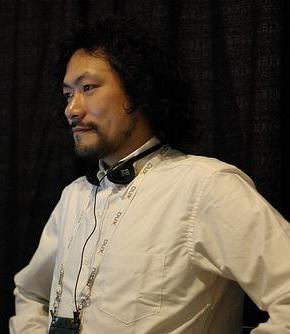
Development of a new Castlevania began in 1994, initially for the Sega 32X, before moving to the PlayStation when that platform’s project was canceled in 1995. 13 The game was directed and produced by Toru Hagihara, the director of Rondo of Blood, with Koji Igarashi serving as assistant director, scenario writer, and programmer before being promoted to director during production; Igarashi went on to produce the series for many years. 1316 Igarashi had come to the project with enough standing to choose his next assignment after the dating simulation Tokimeki Memorial. 13 Because the game was not viewed as a core franchise title, the team was able to make substantial changes to the formula, with a stated goal of producing a longer game than its predecessors — motivated partly by the observation that players commonly traded short games back to shops on release day. 13
Contemporary and retrospective accounts trace the game’s non-linear structure to Metroid, from which it “plucked its structure wholesale,” building a gradually unlocking labyrinth rather than discrete stages. 5 Igarashi himself has said the primary inspirations were Castlevania II: Simon’s Quest and The Legend of Zelda series rather than Metroid: Simon’s Quest supplied the precedent for an exploration-heavy approach the team could point to as proven, while Zelda contributed the exploration and backtracking to reach areas once new abilities were obtained. 1322 The game retained the mechanics, design, and spirit of the Castlevania series while grafting them onto this open structure, emerging as a work distinct from a mere Metroid clone. 5
Its blend of exploration and unlockable abilities helped establish the “Metroidvania” subgenre, a term that spread widely in the game’s wake and became a foundation for later works both within and outside the series. 51320 Igarashi later revisited the template with Bloodstained: Ritual of the Night. 22 Commentators have likened the game’s redefinition of a series to The Legend of Zelda: Breath of the Wild, which similarly fused established design with a new open structure. 5
Reception and reissues
IGN’s original PlayStation review awarded the game 9.0 out of 10, calling it a classic with a vast environment, an enormous array of weapons, and “more secrets than the Pentagon,” while noting that its deliberately retro 2D presentation initially disappointed before its depth won the reviewer over. 12 Retrospective coverage has continued to rank it among the best PlayStation games and one of gaming’s top scores, and the game holds a 9.1 user rating on IMDb. 1116 The game has since been ported many times, including a PSP version, an Xbox 360 release, and the Castlevania Requiem package on PlayStation 4 that bundles it with Rondo of Blood. 619 A direct mobile port for iOS and Android was released in March 2020, offering six text languages, controller support, achievements, and a new continue feature. 11721
Sources
Official Konami page for the mobile port of Castlevania: Symphony of the Night on iOS and Android platforms.
konami.com · retrieved Jul 1, 2026Kotaku article analyzing how Symphony of the Night revolutionized the Castlevania series by blending RPG elements with action-platforming gameplay.
kotaku.com · retrieved Jul 1, 2026CBR guide detailing the familiar companions available to players in Castlevania: Symphony of the Night and their abilities.
cbr.com · retrieved Jul 1, 2026Eurogamer retrospective marking the game's 20th anniversary, discussing how it created the metroidvania subgenre.
web.archive.org · retrieved Jul 1, 2026RPGFan's retro review of Castlevania: Symphony of the Night discussing its design and gameplay as both a landmark title and its Requiem port.
web.archive.org · retrieved Jul 1, 2026IGN retrospective examining Castlevania series history with focus on Symphony of the Night's revolutionary impact on game design.
web.archive.org · retrieved Jul 1, 2026IGN's original October 1997 review praising Castlevania: Symphony of the Night as a classic 2D platformer with exceptional depth and secrets.
web.archive.org · retrieved Jul 1, 2026YouTube video review analyzing why Castlevania: Symphony of the Night remains an excellent metroidvania experience 25 years after release.
youtube.com · retrieved Jul 1, 2026Video Chums' comprehensive step-by-step walkthrough guide for completing Castlevania: Symphony of the Night including secrets and boss strategies.
videochums.com · retrieved Jul 1, 2026YouTube video essay by Josh Strife evaluating Castlevania: Symphony of the Night's design elements and overall quality from a first-time player perspective.
youtube.com · retrieved Jul 1, 2026IMDb database entry for Castlevania: Symphony of the Night listing cast, crew, and plot synopsis.
imdb.com · retrieved Jul 1, 2026Official Konami Castlevania portal with story background, game features, and controller configuration information.
konami.com · retrieved Jul 1, 2026IGN's game hub for Castlevania: Symphony of the Night featuring walkthroughs, reviews, and player resources.
ign.com · retrieved Jul 1, 2026YouTube video of Castlevania: Symphony of the Night gameplay credited as the game that popularized the term metroidvania.
youtube.com · retrieved Jul 1, 2026Google Play store page for the mobile port of Castlevania: Symphony of the Night with user reviews and app information.
play.google.com · retrieved Jul 1, 2026Screen Rant article discussing how creator Koji Igarashi cited The Legend of Zelda as a major inspiration for Symphony of the Night.
screenrant.com · retrieved Jul 1, 2026Facebook post discussing how Symphony of the Night's enemy designs, such as Scylla, were inspired by Greek mythology.
facebook.com · retrieved Jul 1, 2026